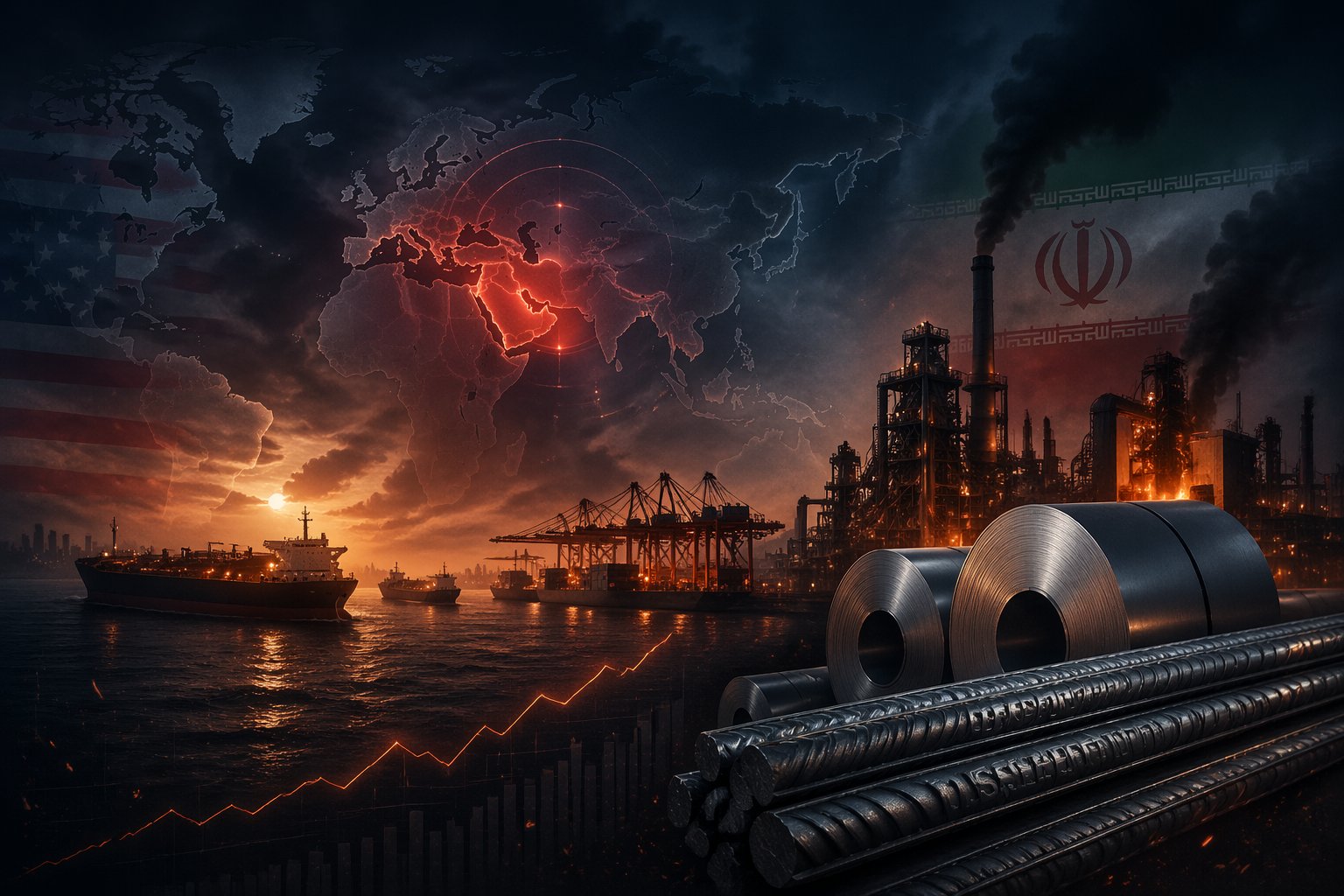
If you have been tracking steel prices recently, you have likely noticed an upward shift — and the reasons stretch well beyond local demand. Here is a calm, clear breakdown of what is happening globally, how it connects to TMT bar prices in your region, and what it means for your construction plans.
Global Conflict Is Pushing TMT Prices Higher
The Iran–USA conflict has disrupted a major steel-exporting nation, tightening global billet supply while crude oil spikes raise energy and freight costs. In India, this layers onto already-strong domestic demand. Prices are elevated and unlikely to fall sharply in the near term. The smart response is not panic — it is planning.
What Is Going On Between Iran and the USA?
In early 2026, escalating military tensions between the United States and Iran crossed into active conflict. For most homebuilders, global politics feels distant — but in this case, the impact on material costs is very direct and very real, right here in South India.
Understanding why starts with one surprising fact: Iran is a major player in global steel.
Why Iran Matters to the Steel World
Iran exports approximately 11 million metric tonnes of steel and semi-finished steel annually, placing it among the top 10 steel-producing nations on the planet. When Iranian steel mills face disruption and Iranian exports encounter sanctions or physical blockade, the global supply of billets and semi-finished steel tightens rapidly — and prices respond.
The chain reaction works like this:
supply drops
costs rise worldwide
freight & energy climb
imports cost more
rise in India
All three upstream pressures — billet scarcity, energy costs, and currency depreciation — feed directly into the price of TMT bars at your dealer.
What Is Happening to TMT Prices in India Right Now?
The Indian TMT market entered Q2 2026 already on strong upward momentum, driven by record government infrastructure spending and a resilient housing market across the country. The Iran conflict has layered additional upward pressure on top of that existing trend.
In plain terms: prices are elevated, and the underlying causes are structural, not short-lived. A sudden normalisation is unlikely in the near term. This does not mean you cannot plan around it — it just means planning smartly matters more than ever.
What This Means for You as a Homebuilder
If you are currently in the planning or early procurement phase of construction, this is a moment for informed decisions — not panic. Here are three things worth knowing:
Do not wait on the assumption prices will fall sharply. The current drivers — geopolitical risk, energy costs, and strong domestic demand — are unlikely to reverse quickly. If your project is 3–6 months away, delaying procurement may cost more than it saves.
Build in a price buffer. A 5–8% flexibility on your TMT line item is a reasonable hedge given current market conditions. Work this into your project estimate early, not as an afterthought.
Be extra careful about where you source steel. When markets are volatile and prices rise, cheaper, substandard bars flood the market from producers cutting corners on quality. This is exactly the moment to be most vigilant about what goes into your walls, columns, and foundations. Learn how to verify any TMT bar before accepting it: How to Identify Genuine TMT Bars.
Why Quality Is Non-Negotiable When Prices Rise
When budgets tighten, the temptation to switch to cheaper, unbranded bars is real — and understandable. But consider this: Fe 550D grade bars, properly quenched and tested, provide up to 14% more yield strength than lower-grade alternatives. The cost difference per tonne is a fraction of the structural risk you take on for a building meant to last 50–100 years.
Certifications like BIS IS 1786:2008 are not just stamps on a packet. They mean the bar has been independently tested and verified to perform under real structural stress. In a market flooded with price-driven compromises, certification is your clearest signal of what is genuine. For a step-by-step guide on verification, see: How to Verify TMT Bar BIS Certification Using the BIS Care App.
The real risk: Substandard steel does not fail immediately — it degrades silently inside concrete over years, through corrosion, reduced ductility, and embrittlement. By the time a failure is visible, the damage has already been accumulating at the structural level. In coastal regions like Kerala and South Tamil Nadu, this risk is amplified by humidity and salt exposure. Read more: Best TMT Bars for Coastal Areas in Kerala.
Tusker TMT’s Advantage in a Disrupted Market
Unlike manufacturers who rely on imported billets, Tusker TMT produces entirely in-house — from billet casting at our Tirunelveli facility through rolling and Thermex quenching, all the way to the finished bar. That means our supply chain has significantly less exposure to the kind of global disruptions the Iran conflict represents.
Why integrated manufacturing matters right now
When import costs spike and overseas supply chains fracture, integrated manufacturers have considerably more control over consistency, cost stability, and availability. For buyers, that translates to less uncertainty at exactly the moment when certainty matters most. Tusker TMT 550D is manufactured at our fully integrated Palavoor plant — every step from raw material to finished bar happens under one roof.
For a detailed look at our end-to-end manufacturing process, see: How TMT Bars Are Made — The 7-Step Process Behind Tusker TMT 550D.
The Bottom Line
The Iran–USA conflict is a real, ongoing factor in global steel markets. It is contributing to rising TMT prices in India, and that trend is unlikely to reverse quickly. The smart response for homebuilders is not panic — it is planning.
Budget with a buffer. Insist on certified quality. Choose suppliers with the supply chain resilience to back their promises.
Building a home is a once-in-a-lifetime investment. Make sure the steel inside it is worthy of the trust you place in it.
Frequently Asked Questions
How does the Iran–USA conflict affect TMT steel prices in India?
Iran is a top-10 global steel producer, exporting approximately 11 million metric tonnes annually. When Iranian exports face sanctions or disruption, global billet supply tightens, crude oil prices spike (raising freight and energy costs for Indian manufacturers), and the rupee weakens — all of which directly increase TMT bar prices in India.
Will TMT bar prices come down in 2026?
A sharp correction is unlikely in the near term. The current pressures are structural — driven by geopolitical risk, elevated energy costs, and record domestic infrastructure demand. Builders should plan with a 5–8% price buffer on their TMT line item rather than waiting for prices to fall.
Should I delay my construction project because of rising steel prices?
Delaying procurement may cost more than it saves. The underlying factors are unlikely to reverse quickly. If your project is 3–6 months away, locking in current pricing with a reliable, certified supplier is generally the smarter move.
Why is integrated manufacturing an advantage during supply disruptions?
Integrated manufacturers like Ferrosco Industries produce billets in-house, from raw material through to the finished bar. This means significantly less exposure to imported billet price spikes and global supply chain disruptions, compared to manufacturers who rely on externally sourced billets.
Ready to Plan Your Construction Purchase?
Talk to your nearest Tusker TMT dealer or get in touch with us directly for current pricing and availability in Tamil Nadu & Kerala.
Tusker TMT 550D — BIS IS 1786:2008 Certified · Tamil Nadu PWD Approved · Fully Integrated Manufacturing
Get a Quote →