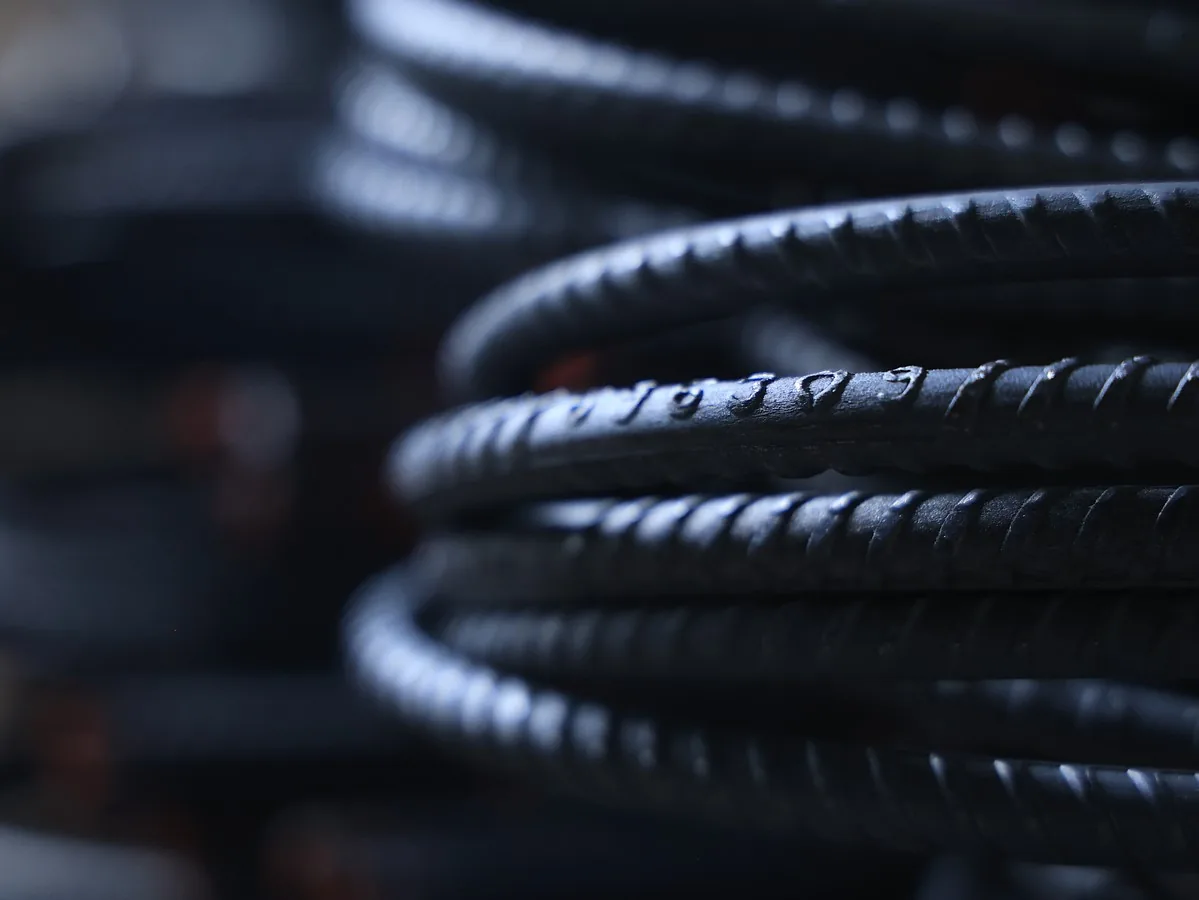
Fe 500D and Fe 550D are the two TMT grades most home and commercial builders in Tamil Nadu and Kerala weigh against each other. Both are BIS IS 1786:2008 certified, weldable and ductile. Fe 550D carries about 10% more load per bar (550 vs 500 N/mm² yield), which can reduce total steel tonnage; Fe 500D has a slightly higher minimum elongation. The decisive practical factor in coastal South India is corrosion: only Fe 550D is offered in a CRS corrosion-resistant variant. This guide compares both grades on the real numbers and shows how to verify the grade you actually receive.
Search Intent: Commercial Investigation & Comparison
If you are choosing a TMT grade for a house, an apartment block or an infrastructure job, this page gives you the engineering basis for the decision — and the verification steps that separate a grade claimed on a tag from a grade proven on a mill test certificate.
Quick Answer
Choose Fe 550D when you want maximum strength per bar, leaner steel quantity, and the option of corrosion resistance — i.e. high-rise, coastal, industrial and most modern residential work. Fe 500D remains a sound, economical choice for standard low-rise structures in dry, low-corrosion inland locations. In coastal Kerala and southern Tamil Nadu, specify Fe 550D CRS — the corrosion-resistant variant standard Fe 500D cannot match. Whichever grade you buy, confirm it with the BIS CML number, the heat number, and the batch mill test certificate.
Why This Matters
The grade printed on a bundle tag decides three things that outlive the building handover: how much steel your structure needs, how it behaves under seismic and dynamic load, and how long the reinforcement survives before corrosion begins to eat its cross-section. Pick the grade on price-per-tonne alone and you can over-buy steel, under-protect a coastal slab, or — worse — accept a bar that was never the grade it claimed. Reinforcement is buried in concrete for the life of the structure; it is the one material you cannot inspect or replace after the pour. That is why the choice deserves the actual numbers.
Technical Explanation — The Real IS 1786:2008 Numbers
TMT grades are named by their minimum yield strength in N/mm². The suffix D denotes the higher-ductility class — a higher minimum elongation and a controlled tensile-to-yield (TS/YS) ratio that lets bars deform before they fail, which is what you want in a seismic zone. Here is how the two grades compare on the values specified in IS 1786:2008, alongside what Tusker TMT 550D actually tests at.
| Property (IS 1786:2008 minimum) | Fe 500D | Fe 550D — Tusker TMT |
|---|---|---|
| Minimum Yield Strength | 500 N/mm² | 550 N/mm² (Tusker tests 560+) |
| Minimum Tensile Strength (UTS) | 565 N/mm² | 600 N/mm² (Tusker tests 600+) |
| Minimum Elongation | 16% | 14.5% (Tusker tests ≥16%) |
| TS/YS Ratio (min) | 1.10 | 1.08 (Tusker ≥1.10) |
| Load capacity per bar | Baseline | ~10% higher |
| Steel quantity for same load | More tonnage | Often less tonnage |
| Corrosion-resistant (CRS) variant | — | Fe 550D CRS — 2–3× resistance |
| Weldability (CE ≤ 0.42) | Yes | Yes |
| Typically specified for | Standard residential, inland | High-rise, coastal, infrastructure |
Source: IS 1786:2008 mechanical property requirements for Fe 500D and Fe 550D. "Tusker tests" values are representative of batch mill test certificate results and vary by lot — always read the MTC for your consignment.
The honest nuance on ductility
Notice that Fe 500D carries a higher minimum elongation (16%) than Fe 550D (14.5%). This is the normal metallurgical trade-off: as you raise yield strength, the code allows a small reduction in minimum ductility. It does not mean 500D bars are more ductile in practice — that depends on mill quality. A well-made Fe 550D from a Thermex-quenched, chemistry-controlled line, like Tusker, routinely tests at 16% elongation or higher, clearing the 550D requirement with margin and matching the 500D minimum. The lesson: read the actual elongation on the mill test certificate, not the grade label.
Why higher grade can mean less steel
Because a 550D bar yields at a higher stress, a structural designer can carry the same load with a smaller bar cross-section or fewer bars — within the limits the code and detailing allow. On steel-heavy elements (columns, transfer beams, rafts) this can trim total tonnage. The saving is real but design-specific; it must come from your structural engineer's calculation, not a rule of thumb. Never down-gauge reinforcement on your own to chase a steel saving.
The Corrosion-Resistant Edge Fe 500D Cannot Match
Raw strength is only half the decision. Over the decades a structure stands, the question that decides its real service life is how the embedded steel survives its environment — and here the grades diverge sharply, because only Fe 550D is offered as a CRS (corrosion-resistant steel) variant.
2–3× corrosion resistance
Fe 550D CRS uses copper-bearing chemistry with tighter sulphur and phosphorus limits — fewer corrosion initiation sites than standard TMT, where chloride and humidity attack the rebar.
Built for the coast
In coastal Kerala and southern Tamil Nadu, chloride-laden air and high humidity make corrosion a structural risk, not just weather. CRS reinforcement extends the life of slabs, columns and foundations in these zones.
Full strength, longer life
You keep the entire Fe 550D strength advantage — 550 N/mm² yield, tested higher — while gaining corrosion protection that standard Fe 500D bars simply do not provide.
Regional Considerations — Tamil Nadu & Kerala
Grade selection in South India is not just a strength question; it is a geography question. The same structure calls for different reinforcement depending on how close it sits to the coast and how aggressive the local environment is.
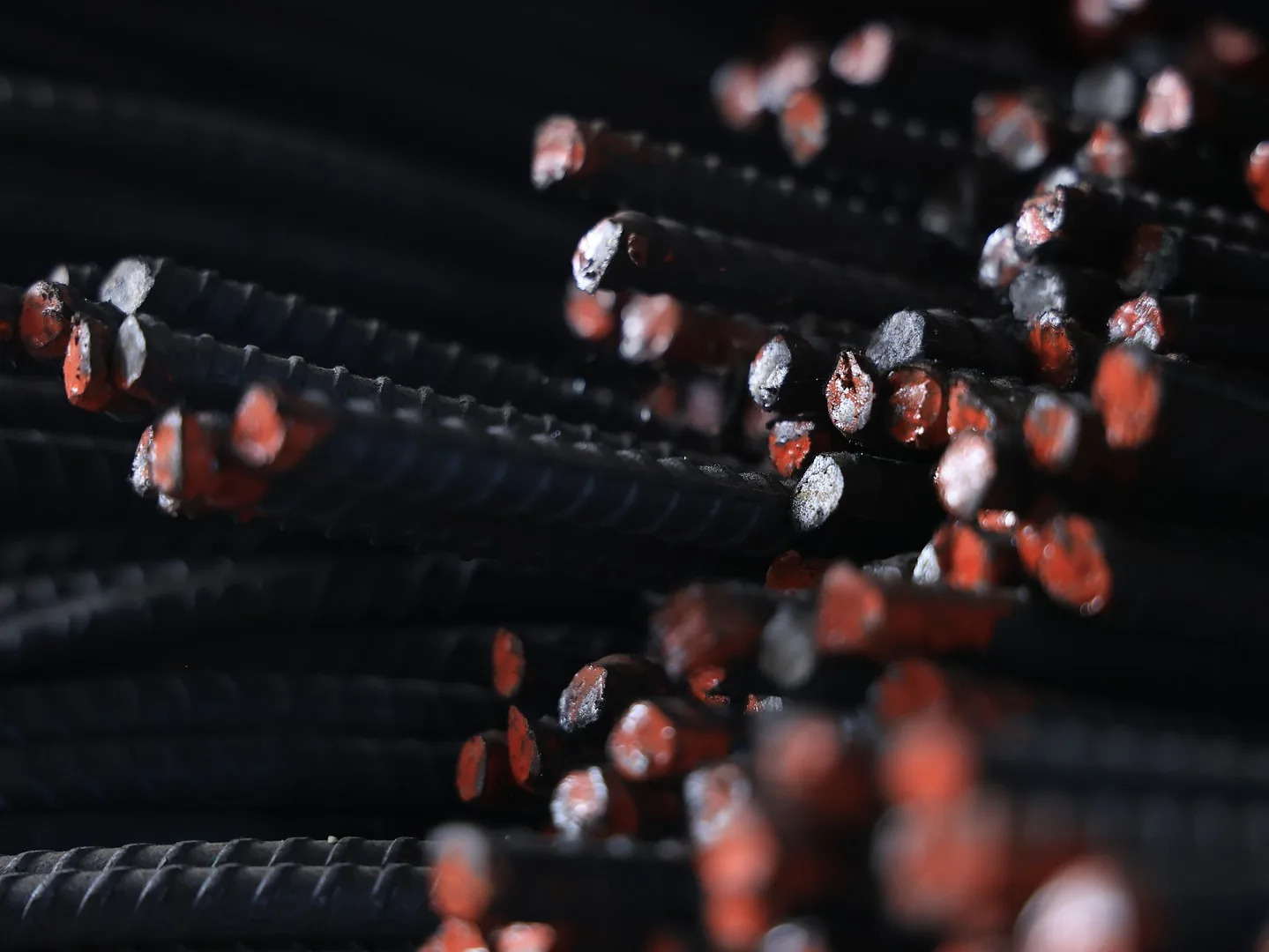
Coastal Kerala (Trivandrum, Kollam, Alappuzha, Kochi, Ernakulam) and the southern Tamil Nadu coast (Kanyakumari, Thoothukudi, Tirunelveli's coastal belt): chloride exposure is continuous. Here, Fe 550D CRS is the defensible specification for any structure expected to last decades. Standard Fe 500D in these zones risks early corrosion regardless of cover quality.
Inland and drier districts (Madurai, Tenkasi, Coimbatore, Tiruppur): corrosion pressure is lower, so the choice is driven by structural demand and steel economy. Fe 550D is still preferred for multi-storey and load-heavy work; Fe 500D can be adequate for simple low-rise residential designs. In every case the governing document is your structural engineer's design and the soil/exposure report — not a district-wide rule.
Because Tusker TMT is manufactured in Tirunelveli and distributed across both states, the same batch-level traceability and CRS option are available whether the site is on the Kerala coast or in inland Tamil Nadu.
How To Evaluate Options — A Buyer's Checklist
Grade choice is only safe if the grade you ordered is the grade you receive. Use this checklist at the point of purchase and at delivery, for any brand:
- Confirm the BIS ISI mark and CML licence number on the bundle tag. Tusker TMT 550D is licensed under IS 1786:2008 with CML 6900106309 — verifiable on the BIS Care app.
- Match the heat number on the tag to the heat number on the mill test certificate for that consignment. A certificate without a matching heat number proves nothing about the bars in front of you.
- Read the actual test values on the MTC — yield, tensile, elongation, TS/YS ratio and chemistry — and check they meet the grade you ordered, not just "pass".
- Check carbon equivalent (CE) if you will weld. CE ≤ 0.42 means no pre-heating or special electrodes are needed for load-bearing welds.
- Specify CRS explicitly for coastal or industrial sites — corrosion resistance is a chemistry specification, not a default.
- Scan the QR on the Tusker tag to pull the batch test record at verified.tuskertmt.com — chemistry, strength and bend results for your exact lot, in your hands.
This is the difference between buying a grade and verifying one. A tag can claim Fe 550D; only a matching heat number, a readable mill test certificate and an independent batch lookup prove it.
Frequently Asked Questions
What is the difference between Fe 500D and Fe 550D TMT bars?
Under IS 1786:2008, Fe 500D has a 500 N/mm² minimum yield and Fe 550D has 550 N/mm² — about 10% more load capacity per bar. Fe 500D requires 565 N/mm² minimum tensile and 16% elongation; Fe 550D requires 600 N/mm² tensile and 14.5% elongation. The higher-strength 550D can reduce steel quantity; the 500D offers slightly higher minimum ductility. Both carry the D higher-ductility class for seismic and dynamic loads.
Is Fe 550D stronger than Fe 500D?
Yes — 550 N/mm² minimum yield versus 500, roughly 10% higher capacity per bar. Tusker TMT 550D tests at 560+ N/mm² yield and 600+ N/mm² tensile, verified on the batch mill test certificate.
Does Fe 550D use less steel than Fe 500D?
Often, yes. A 550D bar carries more load per unit area, so a designer can specify a smaller section or fewer bars for the same demand, reducing tonnage. The saving is design-specific and must be confirmed by your structural engineer — never assumed from the grade alone or applied by down-gauging on site.
Which is better for elongation, Fe 500D or Fe 550D?
On the IS minimum, Fe 500D is marginally more ductile — 16% versus 14.5% — the usual trade-off for higher strength. In practice mill quality decides real ductility: Tusker TMT 550D tests at 16% or above, exceeding the 550D minimum, which is why bend and re-bend tests pass cleanly at junctions and stirrups.
Which TMT grade is best for coastal construction in Kerala and Tamil Nadu?
Fe 550D CRS. Its copper-bearing chemistry and tighter sulphur/phosphorus limits give roughly 2–3× the corrosion resistance of standard TMT while keeping full Fe 550D strength. Standard Fe 500D does not offer this protection and is a poor choice for chloride-heavy coastal zones.
Can Fe 550D and Fe 500D be welded without special precautions?
Both are weldable; the governing factor is carbon equivalent (CE). At CE ≤ 0.42 — as in Tusker TMT 550D — bars weld with ordinary electrodes, no pre- or post-heating, with no strength loss at the joint. Confirm CE on the mill test certificate before welding load-bearing connections.
Is Fe 550D more expensive than Fe 500D?
Per tonne, usually marginally higher. But because a project may need less 550D steel for the same load, installed cost can be comparable or lower. Compare rupees-per-structure as designed, not rupees-per-tonne in isolation.
How do I verify the grade I received is genuine Fe 550D?
Confirm the BIS CML number on the tag (Tusker is CML 6900106309 under IS 1786:2008), match the heat number to the mill test certificate, and scan the QR on the tag to pull the batch record at verified.tuskertmt.com. The certificate shows actual yield, tensile, elongation and chemistry for your lot.
Which grade should I use for a normal 2 or 3 floor house?
Fe 500D is adequate for many standard low-rise designs, but Fe 550D is increasingly specified even for homes — the strength margin allows leaner detailing and the CRS option protects against corrosion in humid and coastal areas. Follow your structural engineer's design and the site's exposure conditions rather than a blanket rule.
Related Reading
Building in Tamil Nadu or Kerala? Specify the right grade.
Talk to Ferrosco about Fe 550D and Fe 550D CRS for your project — with batch-level mill test certificates on every consignment.
Get a Quote → WhatsApp Us →